At age 57, Cláudio (a pseudonym) says he has accumulated almost half a century of experience in the trade of cutting stone. He says he has worked his whole life, since childhood, in various states after learning the trade from his parents, until he arrived in Taperoá, in the backlands of Paraíba, where he found work in a quarry in the rural zone.
Without training from employers, Cláudio did not use protective equipment, although the activity is risky and includes even the use of explosives. The ultimate aim of the industry is to produce stones of the type paving block to be used mainly in paving works.
Aos 57 anos, Cláudio (nome fictício) relata já ter acumulado quase meio século de experiência no ofício de cortar pedras. Ele diz ter trabalhado a vida toda, desde a infância, em diversos Estados, depois de aprender o ofício com os pais, até que chegou à Taperoá, no sertão da Paraíba, onde conseguiu trabalho em uma pedreira na zona rural.
Sem ter tido treinamento de empregadores, Cláudio não usava equipamentos de proteção, embora a atividade seja arriscada e inclua até mesmo o uso de explosivos. O objetivo final do ramo é produzir pedras do tipo paralelepípedo para serem usadas, principalmente, em obras de calçamento.
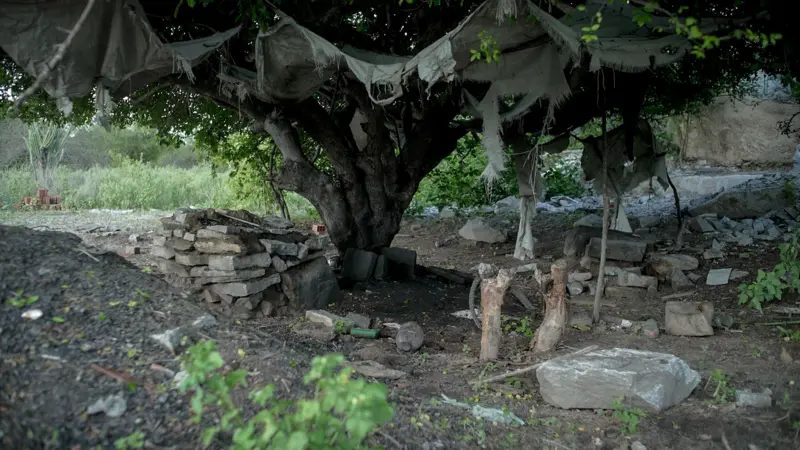
Degrading working conditions
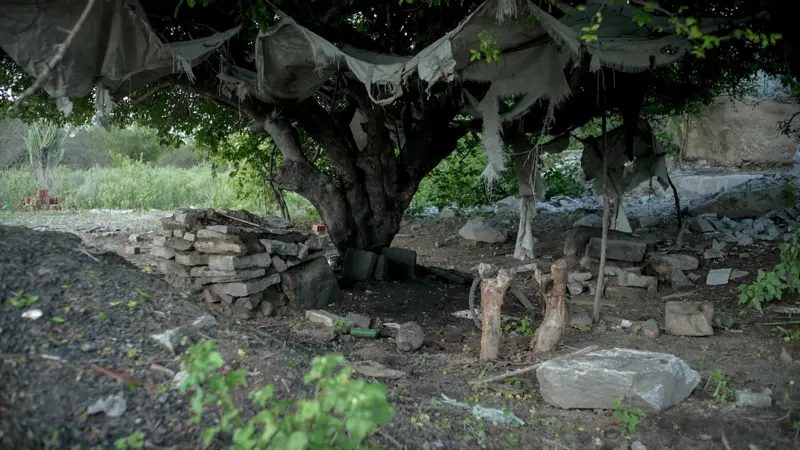
When not cutting stone under the sun, the worker was housed in an improvised shack on site, with dirt floor, rustic wooden structure covered with tarp and pieces of plastic.
After working nine hours a day, he slept on pieces of old foam or car seats improvised as beds. His and his colleagues' belongings were scattered across the floor. The food he ate was kept in the open air and preparation was done in an improvised stone structure on the ground, with fire and firewood. Since there was no bathroom, he did his business in the woods. Baths were taken in puddles formed by rain on the rocks.
The working conditions to which he was subjected, recorded in writing, were considered degrading and his employer was cited by the Ministry of Labor and Employment (MTE) in June 2024 for keeping workers in conditions analogous to slavery. Cláudio and three other workers were rescued.
Condições degradantes de trabalho
Quando não estava sob o sol cortando pedras, o trabalhador ficava alojado em um barraco improvisado no local, com chão de terra, estrutura de madeira rústica e coberta por lona e pedaços de plástico.
Depois de trabalhar nove horas por dia, dormia sobre pedaços de espuma velha ou bancos de carro improvisados como camas. Pertences dele e dos colegas ficavam espalhados pelo chão. Os alimentos que comia eram mantidos ao ar livre e o preparo era feito em uma estrutura de pedra improvisada, no chão, com fogo e lenha. Como não havia banheiro, fazia suas necessidades no mato. Já o banho era tomado em poças formadas pela chuva sobre as pedras.
As condições de trabalho a que ele foi submetido, registradas por escrito, foram consideradas degradantes e seu empregador foi autuado pelo Ministério do Trabalho e Emprego (MTE), em junho de 2024, por manter trabalhadores em condições análogas à escravidão. Cláudio e outros três trabalhadores foram resgatados.
From quarry to public works
The stones cut by him integrated a portion of the production chain of what would become known as the largest paving project in the history of a city neighboring the quarry, Juazeirinho, also in Paraíba, led by the city's mayor and supported by a parliamentarian who today is one of the country's most powerful authorities: federal deputy and president of the Chamber of Deputies Hugo Motta (Republicanos-PB).
Da pedreira à obra pública
As pedras cortadas por ele integraram uma ponta da cadeia produtiva do que viria a ser chamado de maior projeto de pavimentação da história de uma cidade vizinha à pedreira, Juazeirinho, também na Paraíba, liderado pela prefeita da cidade e apoiado por um parlamentar que hoje é uma das mais poderosas autoridades do país: o deputado federal e presidente da Câmara dos Deputados Hugo Motta (Republicanos-PB).
The secret budget at work
BBC News Brasil identified that the political origin of the resource that financed the contract with the company—the one that bought the stones produced by workers in conditions analogous to slavery—is linked to two parliamentarians from the same state.
In the Transparency Portal the money is attributed to a relator amendment, the technical name for what became popularly known as the secret budget, a device part of the General Budget of the Union, whose destination is chosen by parliamentarians without transparency, based on political agreements and whose publicity is at the discretion of the parliamentarian themselves.
After a determination from the Federal Supreme Court (STF), Congress began disclosing the names of those who supported the indication of these relator amendments, based on information disclosed by the parliamentarians themselves.
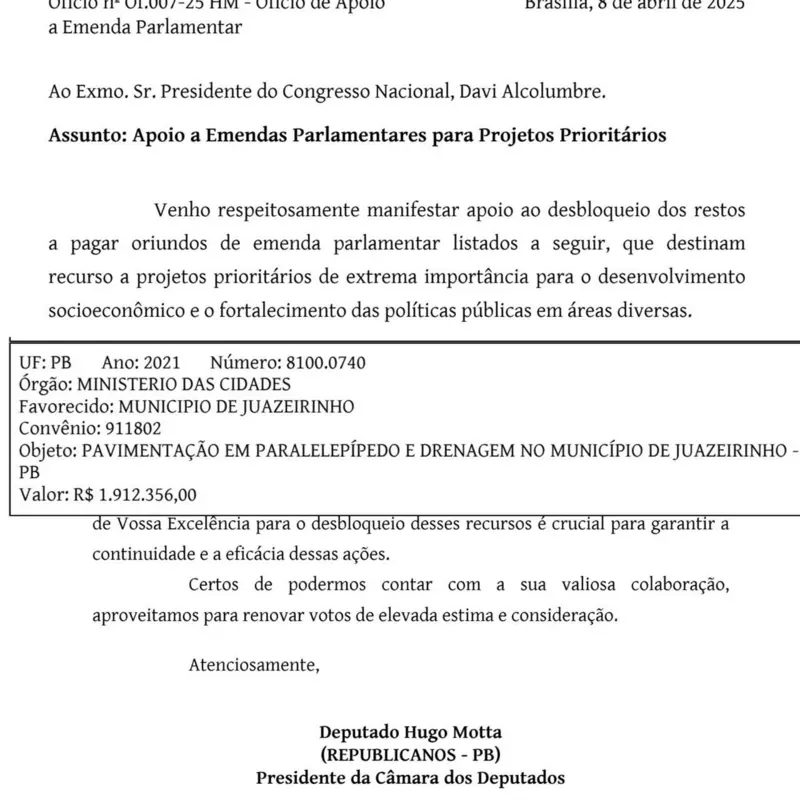
In response sent via the Law of Access to Information to BBC News Brasil, the Chamber of Deputies provided two official letters requesting the release of resources from this amendment to Juazeirinho, sent by senator Veneziano Vital do Rego (MDB-PB) in 2024, and also by federal deputy Hugo Motta (Republicanos-PB), already as president of the Chamber in April of this year.
O orçamento secreto em ação
A BBC News Brasil identificou que a origem política do recurso que bancou o contrato com a empresa - a que comprou as pedras produzidas por trabalhadores em condições análogas à escravidão - está vinculada a dois parlamentares do mesmo Estado.
No Portal da Transparência o dinheiro é atribuído a uma emenda de relator, nome técnico do que ficou popularmente conhecido por orçamento secreto, dispositivo parte do Orçamento-Geral da União, cuja destinação é escolhida por parlamentares sem transparência, a partir de acordos políticos e cuja publicidade fica a critério do próprio parlamentar.
Depois de determinação do Supremo Tribunal Federal (STF), o Congresso passou a divulgar o nome de quem apoiou a indicação dessas emendas do relator, a partir de informações divulgadas pelos próprios parlamentares.
Em resposta enviada por meio da Lei de Acesso à Informação à BBC News Brasil, a Câmara dos Deputados forneceu dois ofícios que pedem a liberação de recursos desta emenda a Juazeirinho, enviados pelo senador Veneziano Vital do Rego (MDB-PB), em 2024, e também pelo deputado federal Hugo Motta (Republicanos-PB), já como presidente da Câmara, em abril deste ano.
"Tem quase cinquenta anos que eu mexo com pedra e eu não tenho riqueza. O senhor [repórter] entrou na minha casa lá, é humilde. Moro de aluguel e vivo com menos de um salário [mínimo]."
Haroldo dos Santos Alves, quarry operator
"Tem quase cinquenta anos que eu mexo com pedra e eu não tenho riqueza. O senhor [repórter] entrou na minha casa lá, é humilde. Moro de aluguel e vivo com menos de um salário [mínimo]."
Haroldo dos Santos Alves, operador da pedreira

The chain of responsibility
Haroldo dos Santos Alves, 59 years old, was an intermediary in the production chain and claims that he profited nothing from the undertaking. The majority of the profit from stone sales, according to him, went to the company that applied them in municipal works, the Realizar Construction Company, whose name was not included on the dirty list.
"I've been working with stone for almost fifty years and I don't have wealth. You [reporter] entered my house there, it's humble. I live in rental and I live with less than a minimum wage," he said.
Almost a year has passed since the operation, which halted the quarry, and Haroldo said he has not been able to regularize the quarry or find other work, only odd jobs. "I rent and live with less than a salary."
The contractor cited, Realizar, has a contract with the Juazeirinho municipal government worth R$ 1.9 million, from resources of an agreement with Caixa Econômica Federal, for paving works in the city. Although Haroldo was held responsible for the harm caused to workers, the termination was paid by an attorney and representative of the Realizar contractor, Jorge Ramos—about R$ 32,000 in total. The company was not included on the dirty list.
A cadeia de responsabilidade
Haroldo dos Santos Alves, 59 anos, era um intermediário da cadeia de produção e afirma que nada lucrou com o empreendimento. A maior parte do lucro das vendas das pedras, segundo ele afirmou à BBC News Brasil, ia para a empresa que as aplicava em obras municipais, a Construtora Realizar, cujo nome não foi incluído na lista suja.
"Tem quase cinquenta anos que eu mexo com pedra e eu não tenho riqueza. O senhor [repórter] entrou na minha casa lá, é humilde. Moro de aluguel e vivo com menos de um salário [mínimo]", disse.
Quase um ano se passou desde a operação, que embargou a pedreira, e Haroldo disse não ter conseguido regularizar a pedreira nem arrumar outros trabalhos, só bicos. "Moro de aluguel e vivo com menos de um salário."
A construtora citada, Realizar, tem um contrato com a prefeitura de Juazeirinho no valor de R$ 1,9 milhão, de recursos de um convênio com a Caixa Econômica Federal, para obras de calçamento na cidade. Embora Haroldo tenha sido responsabilizado pelo dano causado aos trabalhadores, a rescisão foi paga por um advogado e representante da construtora Realizar, Jorge Ramos – cerca de R$ 32 mil ao todo. A empresa não foi incluída na lista suja.

The contractor's argument
Jorge Ramos, attorney and representative of Realizar Construction, told BBC News Brasil that, although the company was the only one cited in the Ministry of Labor and Employment violation, "there were several other companies that could have been called," without naming them.
The ministry report, based on accounts from the employer Haroldo and the rescued workers, states that all quarry production "was being destined for street paving in the city of Juazeirinho" and that the contractor represented by Jorge Ramos was the "main recipient."
He believes that responsibility for any irregularities should extend to whoever contracts the service. "If you have a contract linked with municipality, state or with federal government and all these entities are aware that for the execution of paving with paving blocks it will have to be extraction in the quarry, why isn't this inspected from top to bottom, rather than bottom to top?"
Ramos admitted, however, that the reality of these quarries "is really something difficult to see." For Ramos, one of the reasons why there is no inspection of the origin of the stones is the value of the bids, which he considers low. "The prices for companies are horrible, consequently the purchase will also be horrible and who pays the most in fact is the worker who is there extracting. The company does not agree with this type of situation, but unfortunately it is the situation that the region has as available."
Argumento do contratado
Jorge Ramos, advogado e representante da Construtora Realizar, disse à BBC News Brasil que, apesar de a empresa ter sido a única incluída na infração do Ministério do Trabalho e Emprego, "tinha diversas outras empresas que poderiam ter sido chamadas", sem citar nomes.
O relatório do ministério, baseado em relatos do empregador Haroldo e dos trabalhadores resgatados, diz que toda a produção da pedreira "estava sendo destinada à pavimentação de ruas na cidade de Juazeirinho" e que a construtora representada por Jorge Ramos era "o destinatário principal."
Ele acredita que a responsabilidade sobre eventuais irregularidades deveria se estender a quem contrata o serviço. "Se você tem um contrato vinculado com município, Estado ou com governo federal e todas essas entidades são cientes de que para execução de via com paralelepípedo vai ter que ter a retirada na pedreira, por que isso não é fiscalizado desde cima pra baixo, e não de baixo pra cima?"
Ramos admitiu, no entanto, que a realidade dessas pedreiras "é realmente algo duro de se ver". Para Ramos, um dos motivos pelos quais não há fiscalização da origem das pedras é o valor dos editais, que considera baixo. "Os preços para empresas são horríveis, consequentemente a compra também vai ser horrível e quem paga mais de fato é o trabalhador que está lá tirando. A empresa não concorda com esse tipo de situação, mas infelizmente é a situação que a região tem como disponível."
Political partnership and parliamentary favors
Juazeirinho is a municipality with little more than 17,000 inhabitants located in the Campina Grande region of Paraíba. The current mayor, Anna Virginia Matias (Republicanos), in her second term, comes from a traditional family in city politics. Her uncle, Bevilacqua Matias, was mayor. Her grandfather, Genival Matias de Oliveira, was a judge and vice-mayor. Her father, Genival Matias Filho, was a state deputy.
It was from Anna Virginia's position at the head of the prefecture that a political partnership with federal deputy Hugo Motta was consolidated, also from Paraíba and with roots in the region: his father, Narbor Wanderley, is mayor of Patos, less than 100 km from Juazeirinho.
The pair came together still in 2021 and, since then, the federal deputy has directed a series of parliamentary amendments to the municipality, ranging from paving works to health investments, always with the disclosure of this support on social media.
Parceria política e favores parlamentares
Juazeirinho é um município com pouco mais de 17 mil habitantes situado na região de Campina Grande, na Paraíba. A atual prefeita, Anna Virginia Matias (Republicanos), em segundo mandato, vem de uma família tradicional da política na cidade. Seu tio, Bevilacqua Matias, já foi prefeito. Seu avô, Genival Matias de Oliveira, foi juiz e vice-prefeito. Seu pai, Genival Matias Filho, foi deputado estadual.
Foi a partir de Anna Virginia à frente da prefeitura que se consolidou uma parceria política com o deputado federal Hugo Motta, também da Paraíba e com raízes na região: seu pai, Narbor Wanderley, é prefeito de Patos, que fica a menos de 100km de Juazeirinho.
A dupla se aproximou ainda em 2021 e, desde então, o deputado federal tem destinado uma série de emendas parlamentares para o município, que vão de obras de pavimentação a investimentos em saúde, sempre com a divulgação desses apoios nas redes sociais.
"Hugo Motta has always been a great deputy, an essential partner to our city, someone who never measured efforts to bring investments and improvements to our people. Now, as president of the Chamber of Deputies, I am sure that he will do even more."
Anna Virginia Matias, Mayor of Juazeirinho
"Hugo Motta sempre foi um grande deputado, um parceiro essencial da nossa cidade, alguém que nunca mediu esforços para levar investimentos e melhorias para o nosso povo. Agora, como presidente da Câmara dos Deputados, tenho certeza de que ele fará ainda mais."
Anna Virginia Matias, prefeita de Juazeirinho
Electoral benefits
When Motta was elected president of the Chamber of Deputies in February 2025, Anna Virginia did not spare praise: "Hugo Motta has always been a great deputy, an essential partner of our city, someone who never measured efforts to bring investments and improvements to our people. Now, as president of the Chamber of Deputies, I am sure that he will do even more, with his skill in dialogue, commitment and attentive look to the municipalities."
The exchange of praise is mutual. The deputy visited Juazeirinho in August 2024 to support Anna Virginia Matias's campaign for reelection. "Having a mayor like you in our party (Republicanos) is a reason for joy, for pride, because you are one of the best mayors in all of Paraíba."
In the same speech supporting the mayor, Motta highlighted that she "has done the largest street paving program" and left a promise in the air: "by the end of your second term, we will leave Juazeirinho 100% paved, ending the dust, the mud at people's doors."
Benefícios eleitorais
Quando Motta foi eleito à presidente da Câmara dos Deputados, em fevereiro de 2025, Anna Virgínia não economizou elogios: "Hugo Motta sempre foi um grande deputado, um parceiro essencial da nossa cidade, alguém que nunca mediu esforços para levar investimentos e melhorias para o nosso povo. Agora, como presidente da Câmara dos Deputados, tenho certeza de que ele fará ainda mais, com sua habilidade de diálogo, compromisso e olhar atento para os municípios."
A troca de elogios é mútua. O deputado foi a Juazeirinho, em agosto de 2024, para apoiar a campanha de Anna Virginia Matias à reeleição. "Ter uma prefeita como você em nosso partido (Republicanos) é motivo de alegria, de orgulho, porque você é uma das melhores prefeitas de toda a Paraíba."
No mesmo discurso de apoio à prefeita, Motta destacou que ela "tem feito o maior programa de calçamento de ruas" e deixou uma promessa no ar: "até o final do seu segundo mandato, nós vamos deixar Juazeirinho 100% calçada, acabando com a poeira, com a lama na porta das pessoas."
17
Votes for Hugo Motta in 2010
R$ 1.9M
Contract value for paving project
17
Votos para Hugo Motta em 2010
R$ 1,9M
Valor do contrato de pavimentação
In 2010, when first elected as federal deputy, Hugo Motta received only 17 votes in Juazeirinho. In 2022, more than 4,500, according to open data from the Superior Electoral Court (TSE).
Em 2010, quando foi eleito pela primeira vez como deputado federal, Hugo Motta teve apenas 17 votos em Juazeirinho. Em 2022, mais de 4.500, segundo dados abertos do Tribunal Superior Eleitoral (TSE).
Hidden costs of political favors
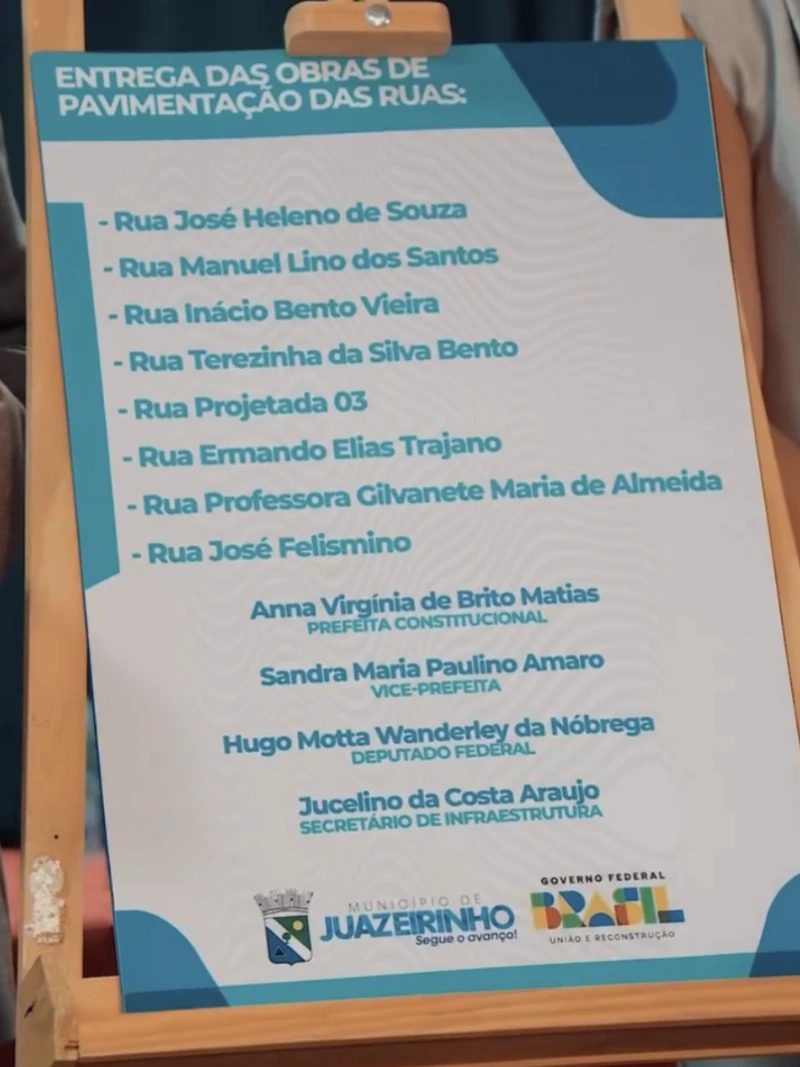
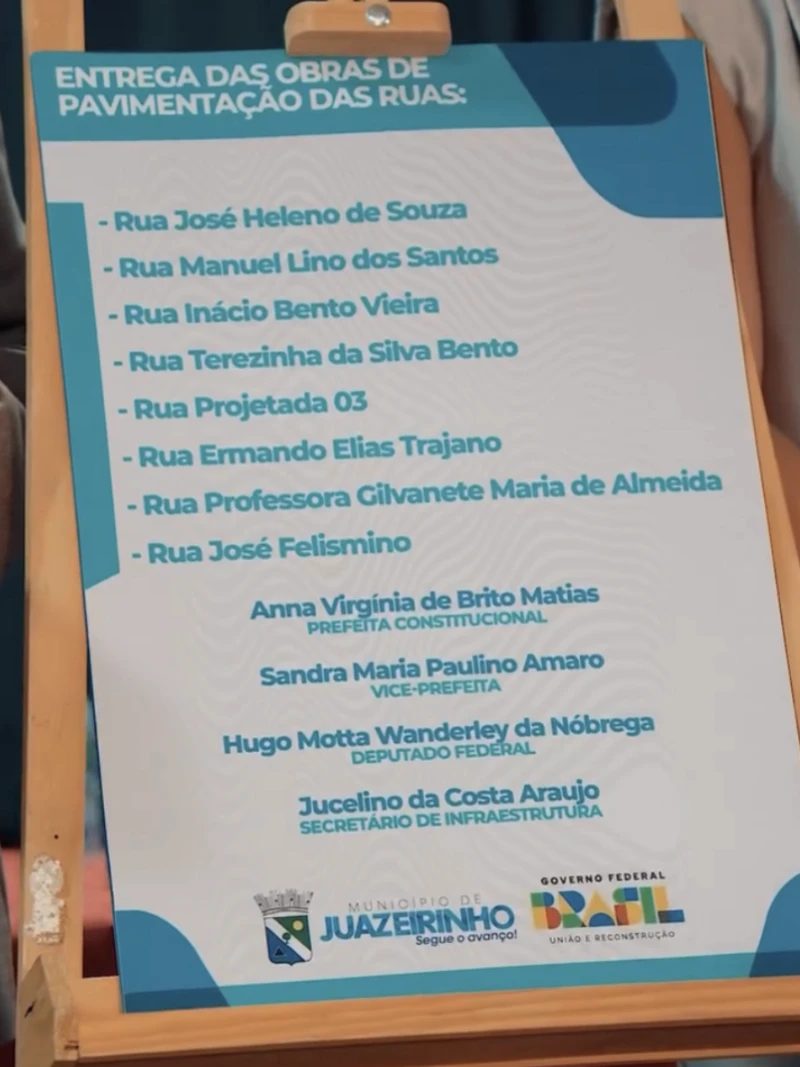
In late 2023, Hugo Motta was honored personally in Juazeirinho with the title of citizen of the municipality, with special emphasis on street paving works. The ceremony featured a moment when a plaque was revealed with the names of streets with delivery of these works, including roads that are part of the contract with Realizar Construction, the same mentioned in the Ministry of Labor and Employment report.
At the bottom of the plaque appear the names of the mayor, her deputy, the city infrastructure secretary and Motta's.
When BBC News Brasil asked Motta and the senator about the allegations, both declined to comment.
Custos ocultos dos favores políticos
No fim de 2023, Hugo Motta foi homenageado pessoalmente, em Juazeirinho, com o título de cidadão do município, com destaque especial às obras de pavimentação de ruas. A cerimônia contou com um momento em que foi revelada uma placa com o nome de ruas com entrega dessas obras, incluindo vias que constam do contrato com a construtora Realizar, o mesmo citado no relatório do Ministério do Trabalho e Emprego.
No pé da placa aparecem o nome da prefeita, de sua vice, do secretário de infraestrutura da cidade e o de Motta.
Quando BBC News Brasil perguntou a Motta e ao senador sobre as alegações, ambos declinaram comentar.