Content warning: This article contains reports of sexual violence that may be disturbing.
Aviso de conteúdo: Este artigo contém relatos de violência sexual que podem ser perturbadores.
A group of at least nine girls, aged 11 to 13, reported that a military official would have touched parts of their bodies, including the breast of one of them, on different dates, in a civic-military school in Cornélio Procópio, in the interior of Paraná. The case occurred in 2023.
The reports were taken to the police. An investigation was opened for investigation of rape of a vulnerable person, and the case proceeded to justice, where a process still runs under secrecy. After the reports, the military monitor continued working at school. He was removed from the government of Paraná almost two years later, in 2025.
Um grupo de ao menos nove meninas, com idades entre 11 e 13 anos, denunciou que um funcionário militar teria tocado partes de seus corpos, incluindo o seio de uma delas, em diferentes datas, em uma escola cívico-militar em Cornélio Procópio, no interior do Paraná. O caso aconteceu em 2023.
Os relatos foram levados à polícia. Uma investigação foi aberta para apuração de estupro de vulnerável, e o caso seguiu para a Justiça, onde um processo ainda corre sob sigilo. Após os relatos, o monitor militar continuou trabalhando na escola. Foi desligado pelo governo do Paraná quase dois anos depois, em 2025.

A pattern of harassment
Civic-military schools, created in 2021 with goals such as guaranteeing more security to students and demanding more discipline, have been targeted by allegations of harassment and other types of sexual violations against students.
The Paraná civic-military model, which holds the largest number of such enrollments in Brazil—the Paraná government speaks of 55% of schools across the country—and is expected to expand this network in 2026, provides for the hiring of inactive military personnel for R$ 5,500 monthly for administrative and student monitoring positions, in addition to other assignments.
These schools are popular among families, who face long waiting lists for enrollment in Paraná. But they are also the target of criticism from some teachers and a lawsuit in the Federal Supreme Court (STF), where PT and PSOL allege that they promote early militarization of students, among other arguments—the case has not yet been ruled on.
Um padrão de assédio
Criadas em 2021 com objetivos como garantir mais segurança aos estudantes e exigir mais disciplina, escolas cívico-militares têm sido alvo de denúncias de assédio e outros tipos de violações sexuais contra alunas.
O modelo cívico-militar paranaense, que detém a maior quantidade de matrículas do tipo no Brasil — o governo do Paraná fala em 55% das escolas de todo o país — e deve expandir essa rede em 2026, prevê a contratação de militares inativos por R$ 5,5 mil mensais para cargos administrativos e de monitoramento de estudantes, além de outras atribuições.
Essas escolas são populares entre as famílias, que enfrentam no Paraná uma longa fila de espera para matrículas. Mas também são alvo de críticas de parte dos professores e de uma ação no Supremo Tribunal Federal (STF), onde PT e PSOL alegam que elas promovem uma militarização precoce dos estudantes, além de outros argumentos — o processo ainda não foi julgado.
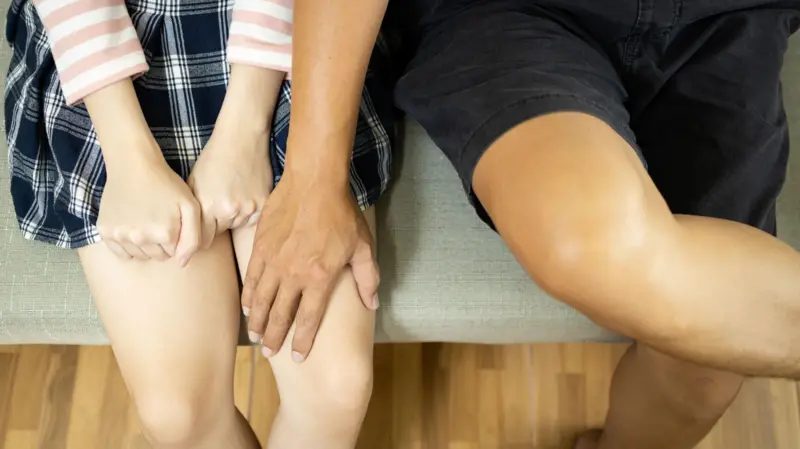
What the girls reported
The judicial process in Cornélio Procópio, which runs under secrecy, brings detailed reports from the girls. According to information from the police inquiry that appears in the case, the monitor would have touched parts of the girls' bodies when "was going to call their attention or talk."
The mother of one of the girls reported in the case that, every time the monitor spoke with her daughter or other girls, "he would put his hand on their shoulder, on their waist" or squeeze their arm. Another student said, according to the case, that he grabbed "her neck, hand, hair and waist and this caused her some discomfort."
She said further that he "even touched her breast during a conversation, but cannot explain whether he touched or looked at her sexually." Another girl said that, after arguing with a friend, she went to resolve the situation in front of the monitor, "at which time her leg began to tremble." The monitor then began "to pass his hand over her leg, which made her uncomfortable, but she understood that he was trying to calm her."
O que as meninas denunciaram
O processo judicial em Cornélio Procópio, que corre em sigilo, traz relatos detalhados das alunas. Segundo informações do inquérito policial que aparecem no processo, o monitor teria tocado partes do corpo das meninas quando "ia chamar a atenção ou conversar".
A mãe de uma das meninas relatou no processo que, toda vez que o monitor conversava com a filha ou outras meninas, "colocava a mão no ombro, na cintura" ou apertava o braço delas. Outra estudante disse, segundo o processo, que ele pegava "em sua nuca, mão, cabelo e cintura e isso lhe causava um certo incômodo."
Disse ainda que ele "chegou a tocar em seu seio durante uma conversa, mas não consegue explicar se ele tocou ou olhou para ela de jeito sexual". Outra aluna afirmou, segundo informações do processo, que, após discutir com uma amiga, foi resolver a situação na frente do monitor, "ocasião em que sua perna começou a tremer." O monitor teria, então, começado "a passar a mão em sua perna, o que a deixou desconfortável, mas entendeu que ele estava querendo acalmá-la".
"When is an aggressor not allowed to remain in the school environment, until an investigation is concluded, he can continue working in administrative processes at the Education Secretariat, but not in school, in no way."
Amanda Sadalla, Serenas
"Ele pode continuar trabalhando em processos administrativos na Secretaria de Educação, mas não na escola, até que uma investigação seja concluída. Ele não pode permanecer dentro do ambiente escolar de forma alguma."
Amanda Sadalla, Serenas
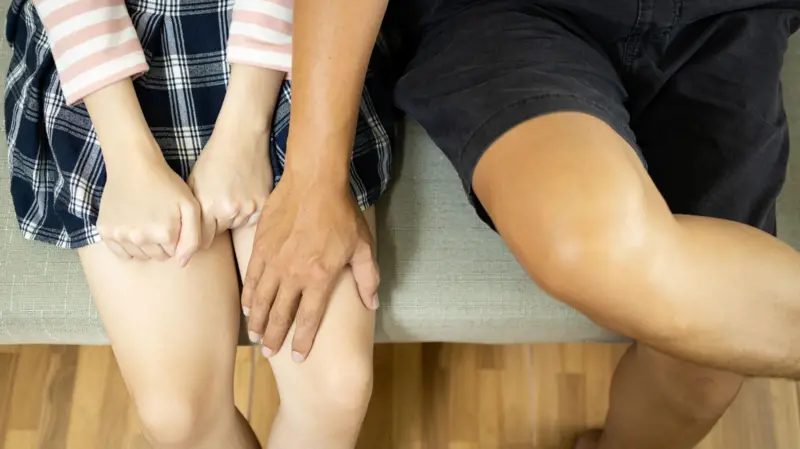
Delayed dismissal
An official investigation was opened in 2023. The military officer would be removed from the program almost two years later, in 2025, according to data from the Transparency Portal seen by BBC News Brasil. The monitor had been in the civic-military schools program since 2021.
After the allegations, the school restricted the contact of the accused staff member with students, keeping him in administrative activities. Because the case has not yet been tried on the merits, the name of the military monitor was preserved in this report.
His defense says he is innocent and that there was acquittal in the case—as the proceedings are not public, the reporting team could not confirm this information. The Paraná government did not comment on the defense's statement.
Desligamento atrasado
Uma investigação oficial foi instaurada ainda em 2023. O militar seria desligado do programa quase dois anos depois, em 2025, segundo dados do Portal da Transparência vistos pela BBC News Brasil. O monitor estava no programa de escolas cívico-militares desde 2021.
Após as denúncias, a escola restringiu o contato do funcionário acusado com os alunos, mantendo-o em atividades administrativas. Como o processo ainda não transitou em julgado, o nome do monitor militar foi preservado nesta reportagem.
Sua defesa diz que ele é inocente e que houve absolvição no processo — como a tramitação do caso não é pública, a reportagem não conseguiu confirmar esta informação. O governo do Paraná não comentou a declaração da defesa.

Other reported cases
At least three other cases have already been reported in local Paraná press, two of them involving military staff and a third, a teacher. In December last year, for example, the state Public Ministry criminally charged a staff member of a civic-military school in Capitão Leônidas Marques, in western Paraná, for rape of a vulnerable person and threats against three adolescents. The man would have touched the adolescents and even threatened one of them.
"The server would have taken advantage of his function in the school to practice libidinous acts against three student adolescents, in addition to threatening one of them so she would not tell anything," said prosecutor Renato Sampaio Cavalheiro in a statement released by the Public Ministry on its website. "The objective now is to seek criminal conviction and damages compensation to the victims."
Another case, reported by the G1 portal, occurred in 2021, the year the civic-military schools program began, in Francisco Beltrão, southwestern Paraná. A reserve military police officer was arrested, and the PM executed a search and seizure warrant at the suspect's house. There was also an episode involving a math teacher, suspected of harassing female students at a civic-military school in Ponta Grossa. He was accused of sexual harassment and sexual harassment.
Outros casos denunciados
Ao menos outros três casos já foram noticiados na imprensa local paranaense, dois deles envolvendo funcionários militares e um terceiro, um professor. Em dezembro do ano passado, por exemplo, o MP estadual denunciou criminalmente um funcionário de um colégio cívico-militar em Capitão Leônidas Marques, no oeste do Paraná, por estupro de vulnerável e ameaça contra três adolescentes. O homem teria tocado as adolescentes e chegou a ameaçar uma delas.
"O servidor teria se valido de sua função na escola para praticar atos libidinosos contra três alunas adolescentes, além de ameaçar uma delas para que não contasse nada", disse o promotor de Justiça Renato Sampaio Cavalheiro em boletim divulgado pelo MP em seu site. "O objetivo agora é buscar a condenação criminal e a reparação dos danos às vítimas."
Outro caso, noticiado pelo portal G1, ocorreu em 2021, ano de início do programa de escolas cívico-militares, em Francisco Beltrão, sudoeste do Paraná. Um policial militar da reserva foi preso, e a PM cumpriu mandado de busca e apreensão na casa do suspeito. Houve ainda um episódio envolvendo um professor de matemática, suspeito de assediar alunas em um colégio cívico-militar em Ponta Grossa. Ele foi acusado de assédio e importunação sexual.

Verbal harassment allegations
Beyond cases of physical sexual assault, BBC News Brasil also identified allegations of verbal harassment by students.
"If you come with that outfit again, I'm going to take you to the corner." This was the phrase that a former student of the Júlio Mesquita civic-military school, in Curitiba, Paraná, reported hearing from a military monitor who works at the school in 2024. "Clearly they compared us to prostitutes," she said.
The ex-student's account appears in a harassment complaint sent to APP-Sindicato, which told the reporting team it will forward the complaint to the Paraná government and to the Police Ombudsman. According to the statement to the union, the school employee would have also said: "If you come with that outfit, we, men, will clearly look at you."
"The school that says it protects the student tries to manipulate us. Piercing, hair color, earrings, necklaces, etc. We are not in a barracks. And they are there only wandering around the school, imposing unnecessary rules as if we were soldiers in the army," says the ex-student in the complaint sent to the union. "We are teenagers, with personality. We have been forced to remove makeup completely, embarrassed because we went with tighter pants or a blouse that was not from the civic-military. When we report harassment, they blame us."
Denúncias de assédio verbal
Além dos casos de assédio sexual físico, a BBC News Brasil identificou também denúncias de alunas de assédio verbal.
"Se vierem com essa roupa de novo, vou levar vocês para a esquina." Foi essa a frase que uma ex-estudante da escola cívico-militar Júlio Mesquita, de Curitiba, no Paraná, contou ter ouvido de um monitor militar que trabalha no colégio, em 2024. "Claramente nos compararam a prostitutas."
O relato da ex-aluna aparece em uma denúncia de assédio enviada ao APP-Sindicato, que disse à reportagem que irá encaminhar o relato para o governo do Paraná e para a Corregedoria da Polícia. Segundo o depoimento ao sindicato, o funcionário da escola teria falado ainda: "Se vierem com essa roupa, nós, homens, claramente iremos olhar."
"O colégio que se diz proteger o aluno tenta nos manipular. Piercing, cor do cabelo, brincos, colares, etc. Nós não estamos em um quartel. E eles estão ali apenas perambulando pelo colégio, impondo regras desnecessárias como se fôssemos soldados no exército", diz a ex-aluna na denúncia enviada ao sindicato. "Somos adolescentes, com personalidade. Já fomos obrigadas a tirar completamente a maquiagem, constrangidas por termos ido com uma calça mais justa ou uma blusa que não fosse a do cívico-militar. Quando denunciamos assédio, eles nos culpam."
9+
Girls reporting harassment in one case
4
Cases confirmed by investigation
300+
Military monitors dismissed since 2021
9+
Meninas denunciando assédio em um caso
4
Casos confirmados por investigação
300+
Monitores militares desligados desde 2021
Lack of transparency
A survey by BBC News Brasil found that more than 300 military monitors have been dismissed since the implementation of the civic-military schools program in 2021, but the reasons are not publicly disclosed. This does not mean they committed any irregularity. The rules allow the military's departure in cases of health problems, serious transgressions or at the military's own request. But the Paraná government's Transparency Portal does not inform the specific reasons.
The names of dismissed military personnel, according to the Paraná government, are also considered confidential information, protected by the General Data Protection Law (LGPD). In practice, the government's interpretation places this data in secrecy indefinitely—the law provides for data retention for up to a hundred years.
Sexual assault is not a type of occurrence exclusive to this school model. In schools in the public network of Paraná that follow the traditional model (i.e., that are not civic-military), BBC News Brasil identified about 400 procedures already instituted, since 2022, by the Education Secretariat, to investigate alleged cases of sexual harassment committed by civil employees. It is the Secretariat itself that investigates these cases.
Falta de transparência
Um levantamento da BBC News Brasil identificou que mais de 300 monitores militares já foram desligados desde a implementação do programa de escolas cívico-militares, em 2021, mas os motivos não são divulgados publicamente. Isso não significa que eles tenham cometido alguma irregularidade. As regras permitem a saída do militar em casos de problemas de saúde, transgressões graves ou a pedido do próprio militar inativo. Mas o Portal da Transparência do governo do Paraná não informa os motivos específicos.
Os nomes dos militares desligados, segundo o governo do Paraná, também são considerados uma informação sigilosa, protegida pela Lei Geral de Proteção de Dados (LGPD). Na prática, a interpretação do governo coloca esses dados em sigilo por tempo indeterminado — a lei prevê a guarda das informações por até cem anos.
O assédio sexual não é um tipo de ocorrência exclusiva desse modelo de escola. Em escolas da rede pública do Paraná que seguem o modelo tradicional (ou seja, que não são cívico-militares), a BBC News Brasil identificou cerca de 400 procedimentos já instaurados, desde 2022, pela Secretaria de Educação, para apurar supostos casos de assédio sexual cometidos por funcionários civis. É a própria secretaria que apura esses casos.
"Violence against girls happens mainly within the home and, secondly, at school. Gender-based violence within schools perpetrated by school professionals is a reality across the entire country."
Amanda Sadalla, Serenas Director
"A violência contra meninas acontece majoritariamente dentro de casa e, em segundo lugar, na escola. A violência de gênero dentro das escolas, praticada por profissionais da escola, é uma realidade de todo o país."
Amanda Sadalla, Diretora da Serenas
Amanda Sadalla, executive director and co-founder of Serenas, a nonprofit organization that supports governments in developing public policies to prevent gender-based violence, says that in cases of allegations by female students, the correct procedure is to remove the accused from school. "He can continue working in administrative processes at the Education Secretariat, but not in school, until an investigation is completed. He cannot remain within the school environment in any way," says Sadalla.
Amanda Sadalla, diretora-executiva e cofundadora da Serenas, organização sem fins lucrativos que apoia governos a desenvolverem políticas públicas para prevenir violência de gênero, diz que, em casos de denúncias por alunas, o procedimento correto é afastar o acusado da escola. "Ele pode continuar trabalhando em processos administrativos na Secretaria de Educação, mas não na escola, até que uma investigação seja concluída. Ele não pode permanecer dentro do ambiente escolar de forma alguma", diz Sadalla.
Government response
In a joint statement, the Paraná Education and Public Security Secretariats say that the comparison between civic-military and regular schools in this context is "inappropriate." They say that "the records are punctual and isolated, resulting in a reduced sample, insufficient to attribute greater incidence of this type of occurrence to a specific educational model."
The government does not comment on the police's refusal to disclose the total number of procedures instituted against military personnel, nor the reason for the dismissals of more than 300 monitors. It says that there were 14 allegations in these institutions. "In all of them, professionals were immediately removed from their functions during the investigation and dismissed ex officio—without need for a court decision—after the conclusion of the investigations."
The secretariats affirm that they "act in strict observance of the principles of integral protection, absolute priority and the best interest of the child and adolescent." They add that "all allegations are investigated in accordance with current legislation and the functional bond of the professional, with both civil and military employees being preventively removed whenever there is a record of allegation." The departments also affirm that the State "maintains a zero tolerance policy for any form of harassment or violence in the school environment."
Resposta do governo
Em nota conjunta, a Secretaria da Educação do Paraná e a da Segurança Pública dizem que a comparação entre escolas cívico-militares e regulares, neste contexto, é "inadequada." Dizem que "os registros são pontuais e isolados, o que resulta em uma amostra reduzida, insuficiente para atribuir maior incidência desse tipo de ocorrência a um modelo educacional específico."
O governo não comenta a recusa da polícia de divulgar o número total de procedimentos instaurados contra militares, nem o motivo dos desligamentos de mais de 300 monitores. Diz que houve 14 denúncias nessas instituições. "Em todas elas, os profissionais foram afastados imediatamente das funções durante a apuração e desligados ex officio — sem necessidade de decisão judicial — após a conclusão das investigações."
As secretarias afirmam que "atuam em observância estrita aos princípios da proteção integral, da prioridade absoluta e do melhor interesse da criança e do adolescente." Acrescentam que "todas as denúncias são apuradas conforme a legislação vigente e o vínculo funcional do profissional, sendo que servidores civis e militares são afastados de forma preventiva sempre que há registro de denúncia." As pastas afirmam ainda que o Estado "mantém política de tolerância zero a qualquer forma de assédio ou violência no ambiente escolar."