Documents released by the United States government about convicted sex offender Jeffrey Epstein indicate that his interest in Brazil went beyond his ties to models and the alleged financing of a prostitution network that included Brazilian women.
BBC News Brasil identified, for example, the existence of a CPF (Brazilian individual taxpayer registration) in Epstein's name at the Federal Revenue Authority. The report also found an email in which Epstein called "interesting" a suggestion made to him to obtain Brazilian citizenship. There are no records, however, that he actually became a Brazilian citizen.
The emails, bank statements, and other documents released by the American government in recent weeks also indicate that Epstein had a team of consultants who monitored the Brazilian economy and suggested investments linked to Brazil.
The emails also show that he intended to get closer to Brazilian businessmen such as Eike Batista, Jorge Paulo Lemann, and the former president of the Central Bank, Armínio Fraga — in the documents, the names were cited by third parties as people of great relevance in the country's scenario.
Being mentioned or having one's image included in the files released by the American government does not necessarily imply a crime.
No documents were found proving that Epstein actually met with the three or had business with them. When approached, Fraga, Batista, and Lemann said they did not meet and had no business of any kind with the American found dead in prison in New York in 2019.
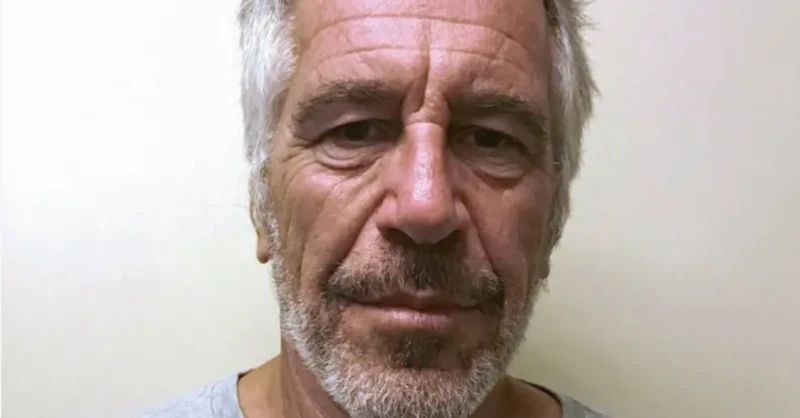
The Brazilian CPF in Epstein's name was registered in 2003, according to the Federal Revenue Authority
The Brazilian CPF
The Brazilian CPF in Epstein's name was registered, according to the Federal Revenue Authority, in 2003. The year coincides with the time when Ghislaine Maxwell — considered Epstein's accomplice and convicted of recruiting minors for sexual exploitation — exchanged emails with a Brazilian businessman about a trip that the couple would make to Brazil between the end of 2002 and the beginning of 2003.
BBC News Brasil identified that the CPF was registered with the same date of birth as Epstein and is in regular status.
Tax attorney and master of tax law Alexandre Tortato explains that in 2003, any foreigner could obtain a CPF from the Federal Revenue Authority by presenting the required documents. He says that in 2003, it was necessary for the foreigner or a proxy to go to a Brazilian diplomatic representation abroad or to a Federal Revenue service point in Brazil.
According to him, it is common for foreign investors to have CPFs. "The CPF is necessary for opening accounts in Brazilian banks, for conducting operations on the stock exchange in the name of an individual, or even for acquiring assets that require public registration," says Tortato.
In his view, obtaining a CPF indicates that Epstein had interests in Brazil beyond tourism. "A tourist does not need to have a CPF. Normally, the foreigner who issues a CPF in their name has commercial interests here," he says.
When approached, the Federal Revenue Authority said, initially, that it could not provide details about the CPF in Epstein's name because the "request for information or confirmation of registration data linked to the Individual Taxpayer Registration (CPF) is restricted to the holder of the registration or their legal representative." In a subsequent note, the Revenue said that "registration in the CPF, including for a foreigner, can be requested by the person themselves or their proxy, as provided for in Annex IV of Normative Instruction RFB 2.172/2024."
Another indication that the CPF in Epstein's name actually belonged to the financier is a list of documents collected by American authorities that was also released by the U.S. Department of State. The document states: "Brazilian CPF (has old POA in it)." The annotation indicates that a Brazilian CPF was found with a "POA" attached to it. "POA" is an acronym commonly used in English for "power of attorney," or procuração. As mentioned by the Federal Revenue Authority, the use of proxies is one of the ways a foreigner can obtain a CPF.
Brazilian nationality: "interesting idea"
In an exchange of emails between Epstein and German businesswoman Nicole Junkermann, the two comment on the possibility of the American obtaining Brazilian citizenship.
"What do you think of getting Brazilian citizenship?" Junkermann asked in an email sent on October 5, 2011.
On the same day, Epstein responded: "Interesting idea, however visas might be a problem, when traveling to other countries," said the American.
The released emails do not make clear the context in which the suggestion was given. The correspondence occurred two years after he had served 13 months in prison following an agreement with the Florida justice system in which he acknowledged having engaged in sexual exploitation of minors.
In testimony given to American authorities in 2010, a former Epstein employee said that the businessman made constant trips to Brazil to visit clients and that, when he was in Brazil, he made contact with a woman who presented him with girls, including minors.
Brazilian nationality would therefore facilitate the formalities for Epstein to travel to Brazil, since as an American, he would need to go through the visa process with the Brazilian government.
BBC News Brasil attempted to contact Nicole Junkermann by email, but received no response. A note attributed to her published by the British news portal The Tab says that a spokesperson for Junkermann stated that she was "deceived and misled" by Epstein and described the crimes committed by him as "terrible."
When approached, the Ministry of Justice and Public Security sent a note informing that there is no record of naturalization in the name of Jeffrey Edward Epstein in Brazil.
Documents from the U.S. Department of Justice, released in recent weeks
Betting on the Real's appreciation ahead of the World Cup
Another email identified by BBC News Brasil indicates that Jeffrey Epstein received information about the Brazilian economy and suggestions for investments involving Brazilian assets.
On March 12, 2013, Epstein received suggestions to invest in currency notes linked to the Real with the expectation of appreciation due to the likely increase in the Brazilian interest rate. "I really think we should put some money in this note. Being long BRL (real) for the World Cup makes sense. Domestic inflation should allow them to accept a slight currency appreciation. And they should probably raise rates by 150 basis points this year," says an excerpt from the email sent by Paul Barrett, who at the time worked at JP Morgan bank.
Barrett then advised Epstein to invest US$ 1 million. In response, the American wrote: "Ok."
Under Brazilian law, there is no prohibition for foreigners to make investments in currency notes linked to the real. BBC News Brasil found no emails proving that the transaction was carried out. According to the email, the investment would have been made through the company Southern Trust, one of the companies used by Epstein to do business.
The bet, however, would have been correct if it was actually made. As predicted by Epstein's consultants, the Brazilian base interest rate rose in the following months. By July 2014, the month of the World Cup, it had already risen from 7.5% to 11% per year.
Visit to Brazil and attempts to meet
Epstein's interest in Brazil also led him to try to get closer to Brazilian businessmen, according to documents released in recent weeks.
These attempts are recorded in email exchanges that occurred between the years 2002 and 2003, and between 2012 and 2013.
In the first, Ghislaine Maxwell — sentenced to 20 years in prison for recruiting minors for sexual exploitation — spoke with Brazilian businessman Marcelo de Andrade in December 2002 about a trip she and Epstein would make to Brazil in the following months.
In the emails, Andrade, who runs an environmental non-governmental organization, suggests the names of Brazilian businessmen with whom Epstein and Maxwell could meet during their stay in Brazil. Andrade suggested meetings with Armínio Fraga, who was at the time leaving the leadership of the Central Bank; with businessman Jorge Paulo Lemann, currently considered the third richest Brazilian on the Forbes list; and with the then owner of the newspaper Gazeta Mercantil, Luiz Fernando Levy, who died in 2017.
Andrade told BBC News Brasil that a mutual friend asked him to help a "very rich couple" during their trip to Brazil. "Ghislaine sent me an email asking who were the people I admired most in Brazil and I made a list of people I thought were interesting," says Andrade.
In an email sent by Andrade to Ghislaine Maxwell on December 16, 2002, the Brazilian says he had managed to confirm a first appointment. "I managed to confirm the first meeting: Luis Fernando Levy, president of Gazeta Mercantil, on Friday at 10am, at his office. Jorge Paulo Lemann is coming back from a trip tonight, so I will confirm tomorrow. Arminio Fraga, president of the Central Bank (Soros's star pupil) is handing over his position this week to Meirelles, his successor and perhaps unable to participate, maybe on Saturday, would you be available?"
Andrade says he met the couple at a restaurant in São Paulo, between late 2002 and 2003. On that occasion, he says, the three discussed the possible meetings with the names he suggested. He says that at the time of the meeting and the emails, he had no knowledge of the crimes for which Epstein and Ghislaine were convicted. "I had no idea. When the news came out, years later, I was quite surprised. It's really a pity when we see people using their power and influence for such terrible things," says Andrade. He says he does not believe the suggested meetings took place. "They never told me anything about whether the meetings happened or not."
Email exchanges between Ghislaine Maxwell and a Brazilian businessman, dated December 2002
Invitation to Eike Batista
Another Brazilian businessman who was targeted by Epstein was former billionaire Eike Batista. Emails exchanged throughout 2012 between Epstein and British businessman Ian Osborne show attempts to bring the American closer to Eike Batista.
In one of the revealed emails, Epstein indicates that Osborne would be the person indicated to establish contact with Eike Batista. In another email, on August 28, 2012, Epstein demonstrates being informed about Batista's businesses and writes to executive Sultan bin Sulayem, CEO of logistics group DP World, asking if he would be interested in doing business with the Brazilian. "I know that Eike Batista approached Hutchinson for a JV (abbreviation for joint-venture) in a new port in Brazil. He has cash flow problems. Any interest?" said Epstein.
In another email, on March 6, 2012, Ian Osborne consulted Batista's then-executive Marcelo Horcades about the possibility of a meeting with the Brazilian. In response, Horcades says: "Eike is completely busy on Thursday. Let's hold the meeting with Eike on Friday."
There are no documents, however, proving that the meeting took place. On the following day, Osborne sent an email to Epstein with the title "Eike Batista 120225 final.doc", indicating an attempted commercial agreement between Epstein and Batista. The document, however, was not found.
In the following year, in 2013, Epstein tells Osborne he will be going to the island of St. Barth, in the Caribbean, and says the Briton could invite Eike Batista for lunch with Epstein and Elon Musk. "I'm going to St. Barth, I believe Ike (sic) is still on his yacht. if he wants to have lunch with me and elon musk, feel free to invite him," said Epstein.
In another excerpt, Batista's communications team denies he had contact with Epstein: "Businessman Eike Batista reaffirms once again that he does not know, has never spoken or exchanged messages with Epstein. The references to Eike's name are merely incidental and without any relevance."
BBC News Brasil also approached Armínio Fraga, who denied meeting Epstein: "My name was given as someone to meet, in a list with others. It did not happen." The communications team of Jorge Paulo Lemann said that "Jorge Paulo Lemann never knew Jeffrey Epstein."